When Your Wauwatosa Home Needs Foundation Repair: What to Look For
Understanding the Ground Under Wauwatosa
Wauwatosa is a classic Milwaukee suburb, full of solid brick bungalows, Tudors, and Cape Cods built mostly between the 1920s and 1950s. Those homes have charm, good bones, and often a concrete foundation that has been doing its job for nearly a century. But the soil here - heavy clay that expands when wet and shrinks during dry spells - puts constant stress on those old foundations. Over time, that movement can lead to structural issues that start small and get worse if ignored.
If you own an older home in Wauwatosa and have noticed sticking doors, sloping floors, or cracks in the basement walls, you are likely seeing the early signs of foundation movement. The good news is that foundation repair wauwatosa contractors deal with these exact problems every day. The key is catching them before they turn into major structural failures.
Common Foundation Problems in Older Wauwatosa Homes
The typical foundation in this area is either a poured concrete foundation or a block foundation. Both can develop issues, but the patterns are different. Concrete foundations tend to crack in straight lines, often at corners or where the footing meets the wall. Block foundations, on the other hand, can bulge or bow when the soil pressure gets too high. Both types are vulnerable to frost heave, which is when freezing ground lifts the foundation unevenly, causing it to settle back out of level when the ground thaws.
Another frequent problem is water. Basement waterproofing is not just about keeping the floor dry. When water sits against the foundation wall, it increases the hydrostatic pressure and can push the wall inward. Over time, that pressure causes cracks, leaks, and even bowing of the wall. In crawl spaces, the same thing happens, but it is harder to spot because you do not go down there often.
Signs That It Is Time for a Closer Look
Not every crack means your house is falling down. But there are a few red flags that should prompt a home inspection by someone who understands foundations. Look for horizontal cracks in the basement walls, especially if the wall is bulging inward. Check for stair-step cracks in block foundations, which usually indicate differential settling. Outside, look for gaps between the brick veneer and the foundation, or between the foundation and the sidewalk. If your doors stick suddenly or your floors have developed a noticeable slope, that is another sign that the foundation may be shifting.
If you see any of these, the next step is an engineered foundation report. A structural engineer can assess the severity of the problem, determine whether it is active or stable, and recommend the right repair method. That report is also essential if you need a permit, because the Wauwatosa building code requires engineered plans for any structural repair work.
Repair Options: From Simple to Structural
The right fix depends on what is wrong. For minor cracks and leaks, hydraulic cement can seal the gap and stop water intrusion. For wider cracks or areas with ongoing movement, carbon fiber straps can be epoxied across the crack to reinforce the wall and prevent further movement. That is a common solution for concrete foundations that have cracked but are not bowing.
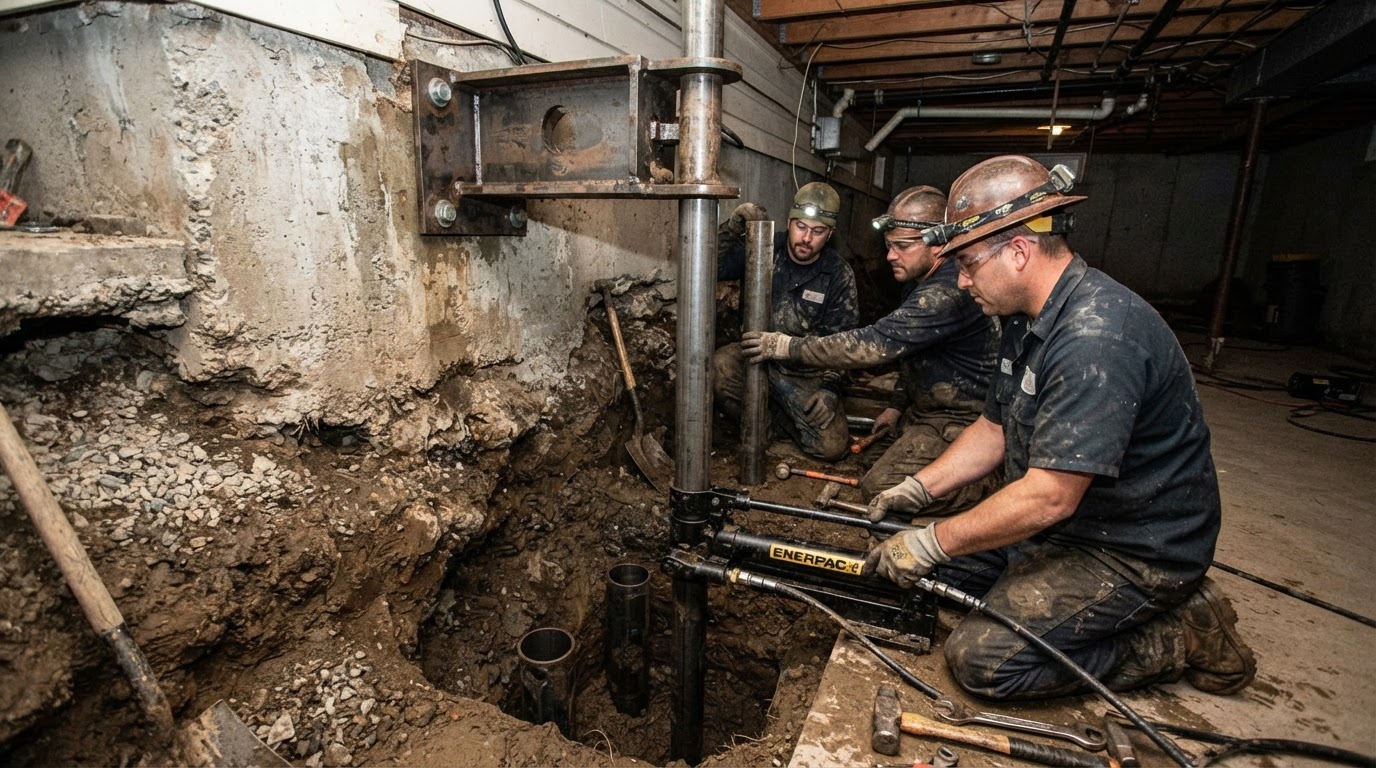
For bowing walls or significant settling, you need a more invasive approach. Excavation is often required to expose the outside of the foundation, so you can install new footing, helical piers, or a pier and beam system to transfer the load to stable soil. Helical piers are a good choice when the soil near the surface is unstable but deeper soil is solid. They are screwed into the ground until they hit a load-bearing layer, and then the foundation is lifted and anchored to them. This approach avoids the long curing times of concrete and works well in tight spaces where excavation is limited.
In crawl spaces, repairs often involve both structural work and waterproofing. You might need to install interior drainage along the footing, run it to a sump pump, and then pump the water out to a French drain or the storm sewer. That combination stops the water pressure from pushing on the walls and keeps the crawl space dry. It also helps with radon mitigation, because a dry crawl space with proper ventilation reduces the potential for radon gas to enter the living space.
Why Water Management Is Part of the Job
You cannot talk about foundation repair wauwatosa without talking about water. The two are linked. Most structural issues in this area start with water. The clay soil expands when wet, pushing against the foundation. If the gutters are clogged or the grading slopes toward the house, water pools at the base of the foundation. Over time, that leads to settling, cracking, and bowing. That is why any good repair plan includes a water management strategy. It might be as simple as extending downspouts and regrading the yard, or as involved as installing an interior drainage system with a sump pump and a French drain outside the footing.
Basement waterproofing is not a luxury. It is a structural necessity. If you stop the water, you stop a lot of the movement. And if you combine waterproofing with structural reinforcement, you can extend the life of the foundation by decades. That is the approach most experienced contractors take in Wauwatosa: fix the structure, then fix the water problem so it does not come back.
Working with the Wauwatosa Building Code
Wauwatosa has specific requirements for foundation work. Any repair that involves structural changes, excavation, or changes to the load-bearing system needs a permit and an engineered foundation report. The code also has rules about how close you can place helical piers to property lines, how deep footings must be to avoid frost heave, and how drainage systems must be routed to avoid affecting neighboring properties. A good local contractor knows these rules and will pull the necessary permits. That protects you and ensures the work passes inspection.
Hiring a Contractor: What to Ask
When you are ready to get estimates, ask a few key questions. First, ask whether they will provide an engineered foundation report or work from one you already have. Second, ask about their experience with your type of foundation. Concrete foundation repairs are different from block foundation repairs, and pier and beam systems require a different skill set than carbon fiber strap installations. Third, ask how they handle water. If their plan does not include interior drainage, sump pump, or French drain work for a wet basement or crawl space, that is a red flag. Fourth, ask about warranties. Most reputable contractors offer a transferable warranty on structural repairs. Finally, ask how they handle excavation. If the repair requires digging, you want to know how they will protect your landscaping, your driveway, and your neighbor's property.
Final Thoughts on Foundation Care
Foundation repair is not cheap, but ignoring the problem is more expensive. A small crack that lets in water can become a bowing wall that requires full excavation and a new footing. The same is true for crawl space issues. A little moisture and a few cracks can turn into a sagging floor and a failed foundation if left unchecked. The smart move is to get a home inspection and an engineered foundation report as soon as you notice a problem. That gives you the facts you need to decide what to do and how to budget for it.
Wauwatosa is a great place to own a home, but the soil and the age of the houses mean that structural issues are part of the deal. The key is to address them early, with the right methods and the right contractor. Whether you need carbon fiber straps for a cracked wall, helical piers for a settling corner, or a full interior drainage system for a wet crawl space, foundation repair wauwatosa professionals have the experience and the tools to get the job done right.